
February 19, 2026
Women artists are driving one of the most dynamic and compelling shifts in the art market today. From bold abstraction to intimate figuration, women in Contemporary art are leading conversations across galleries, institutions and private collections worldwide. ‘HER’ celebrates this moment, bringing together women artists whose practices are assured, individual and unmistakably of the now, marking International Women’s Day with purpose and optimism.
Women artists are everywhere in Contemporary art right now. Their work appears across major gallery programmes, institutional exhibitions and serious private collections, leading conversations and engaging collectors at every level.
For International Women’s Day, Maddox Gallery presents ‘HER’, an exhibition marking this progress by bringing together influential women artists working across the Contemporary art sphere today.
The Breadth of Women Artists in Contemporary Art
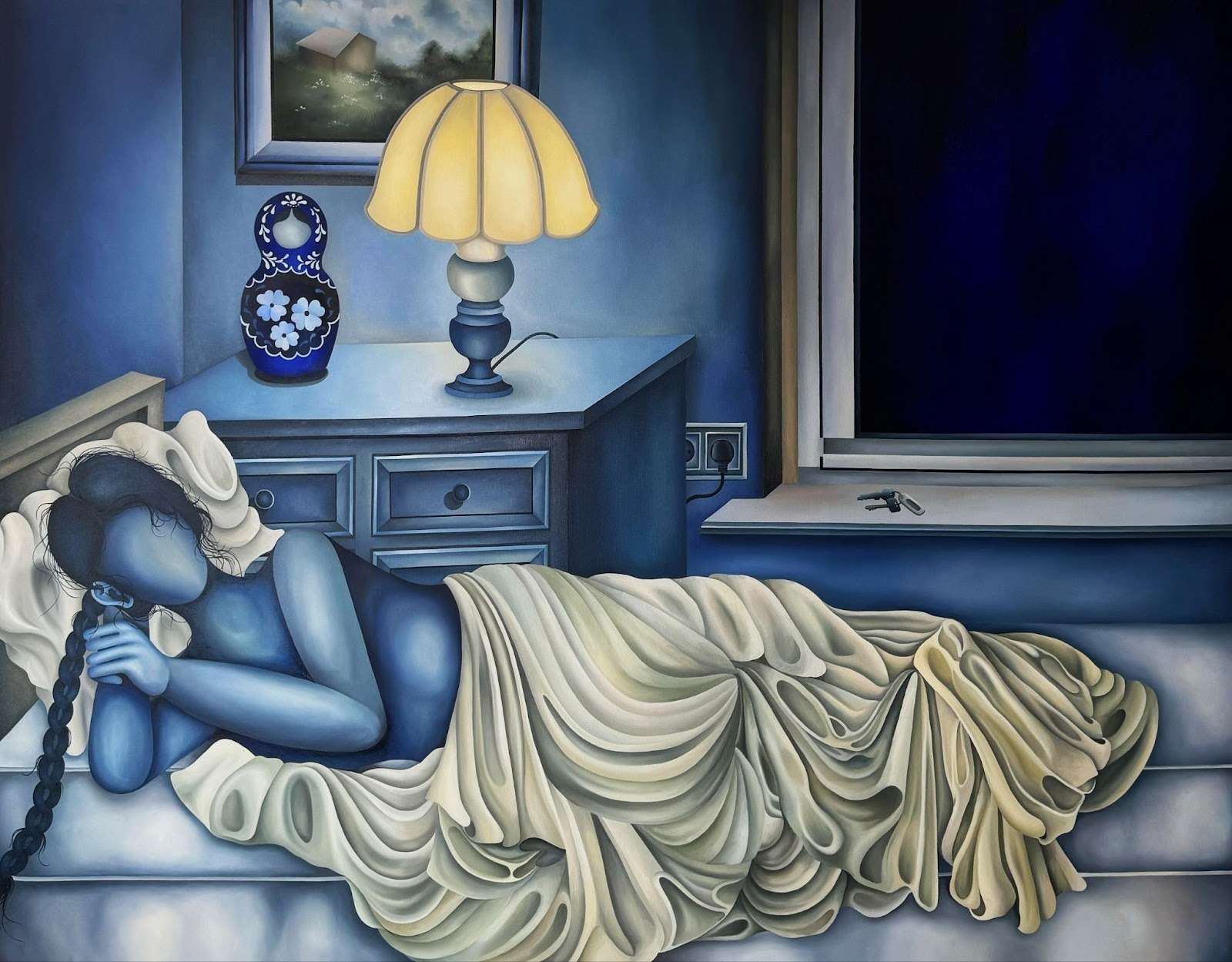
Celine Ali, Night Thoughts (2024)
What distinguishes women in Contemporary art right now is the breadth of practices working in parallel. Bold abstraction appears alongside figuration, intimate works sit next to large-scale gestures, and younger voices are shown in proximity to artists whose bodies of work have developed over decades.
‘HER’ brings this range into focus. Uniting women artists working across abstraction and figuration at different stages of their careers, the exhibition creates space for distinct ways of seeing, allowing each practice to be encountered on its own terms.
|
Art Market Insight: Why Women Artists Are Leading Contemporary Art Right Now Women artists are driving one of the most decisive shifts in the Contemporary art market through sustained exhibition histories, increased exposure and changing patterns of institutional and collector support.
|
‘HER’ – Bringing Together Influential Women Artists Across Generations
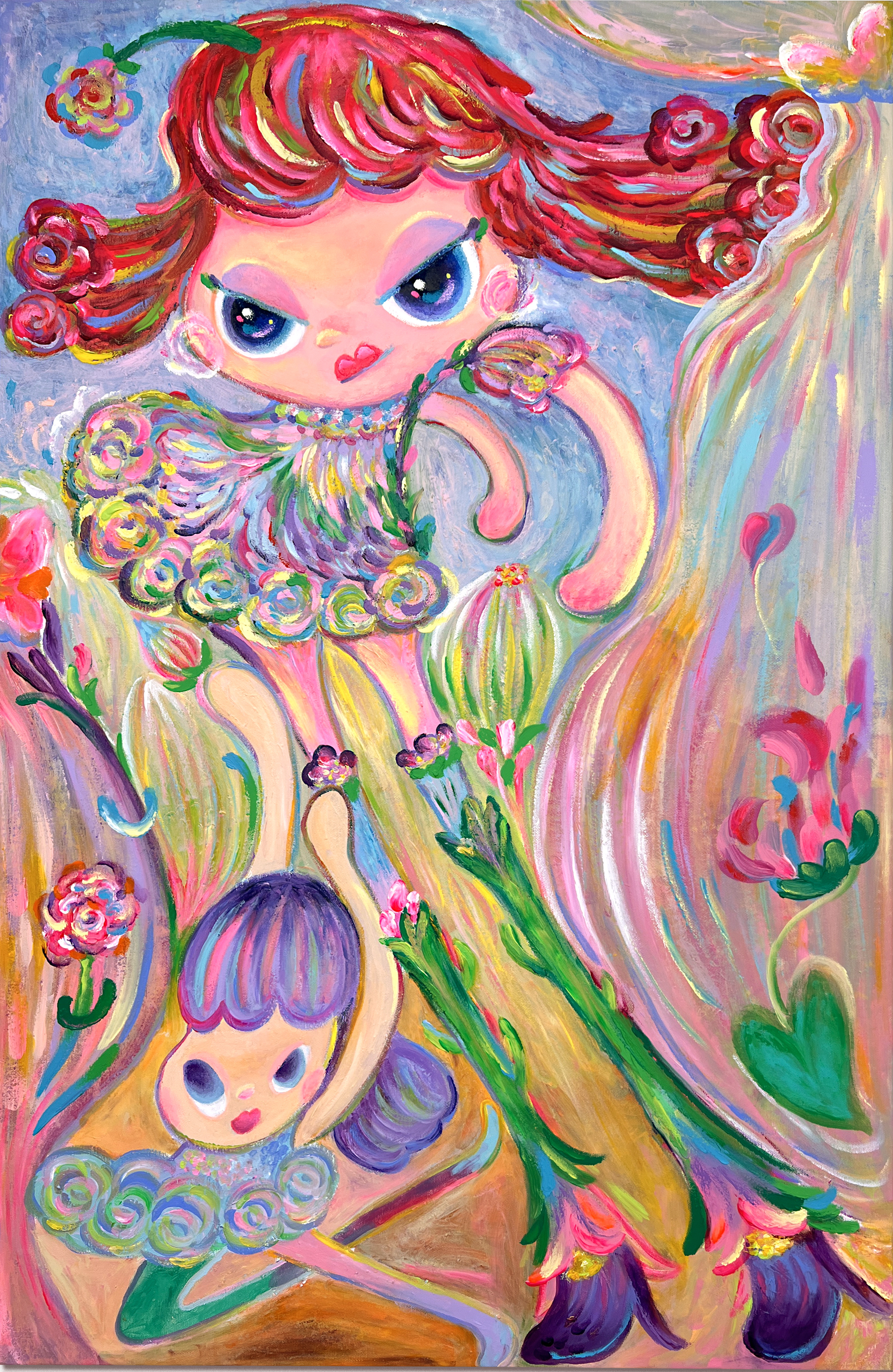
Bibi Lei, Flourishing Girls II (2026)
‘HER’ brings together women artists whose output spans generations, approaches and visual languages without attempting to collapse them into a single narrative, placing established figures alongside Contemporary women painters working at the forefront of the medium today. The exhibition moves between abstraction and figuration, intimacy and scale, placing the emphasis on their work rather than what they are asked to represent.
There’s no single story running through ‘HER’. Instead, the exhibition invites visitors to move between very different styles of creating, paying attention to how artists handle form, surface, space and subject. The interest lies in the contrasts, and in the freedom of seeing this range of practices side by side.
The New Women Artists of ‘HER’: Individual Practices in Focus
All working decisively in the present moment, the new women artists featured on the first floor of the exhibition represent a range of Contemporary practices. Their work shows a strong command of composition and surface, whether through interiors and imagined spaces, bodies and objects, or moments of movement and pause.
Helen Beard
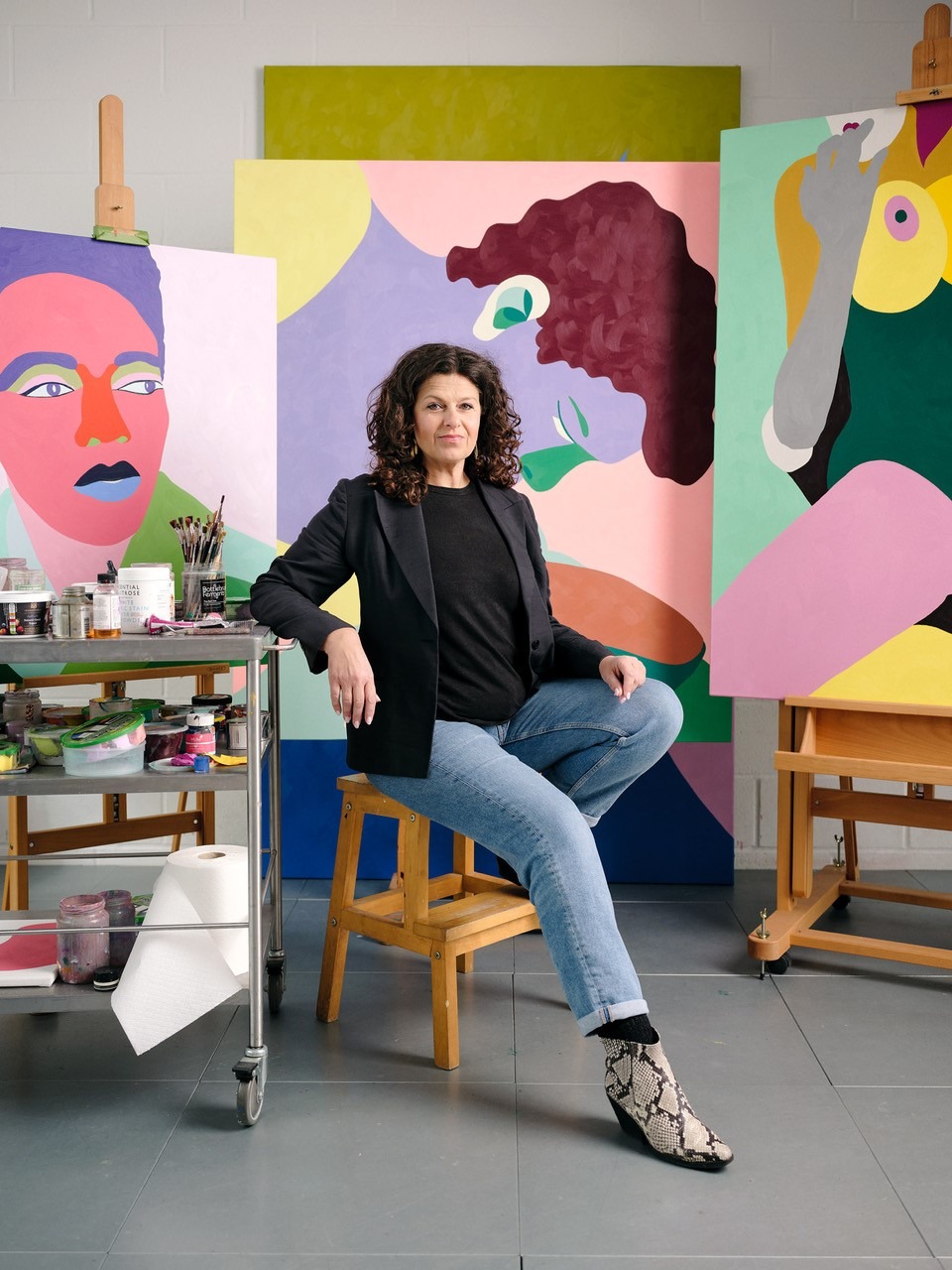
Helen Beard seated in front of her works. Photo Credit: David Shoukry
Contemporary British artist Helen Beard is part of a generation of young women artists who are unafraid to work with subjects long treated as taboo. Her paintings are close-up and unapologetically physical. She crops the body so tightly that the viewer is often observing fragments – limbs, backs, hands, faces – rendered in saturated planes of colour. At this scale, figuration starts to slip into abstraction, with shape, hue and movement carrying as much weight as the body itself. The surfaces remain deliberately flat, heightening immediacy and compressing space so that colour, form and sensation take precedence.
Jessica Brilli
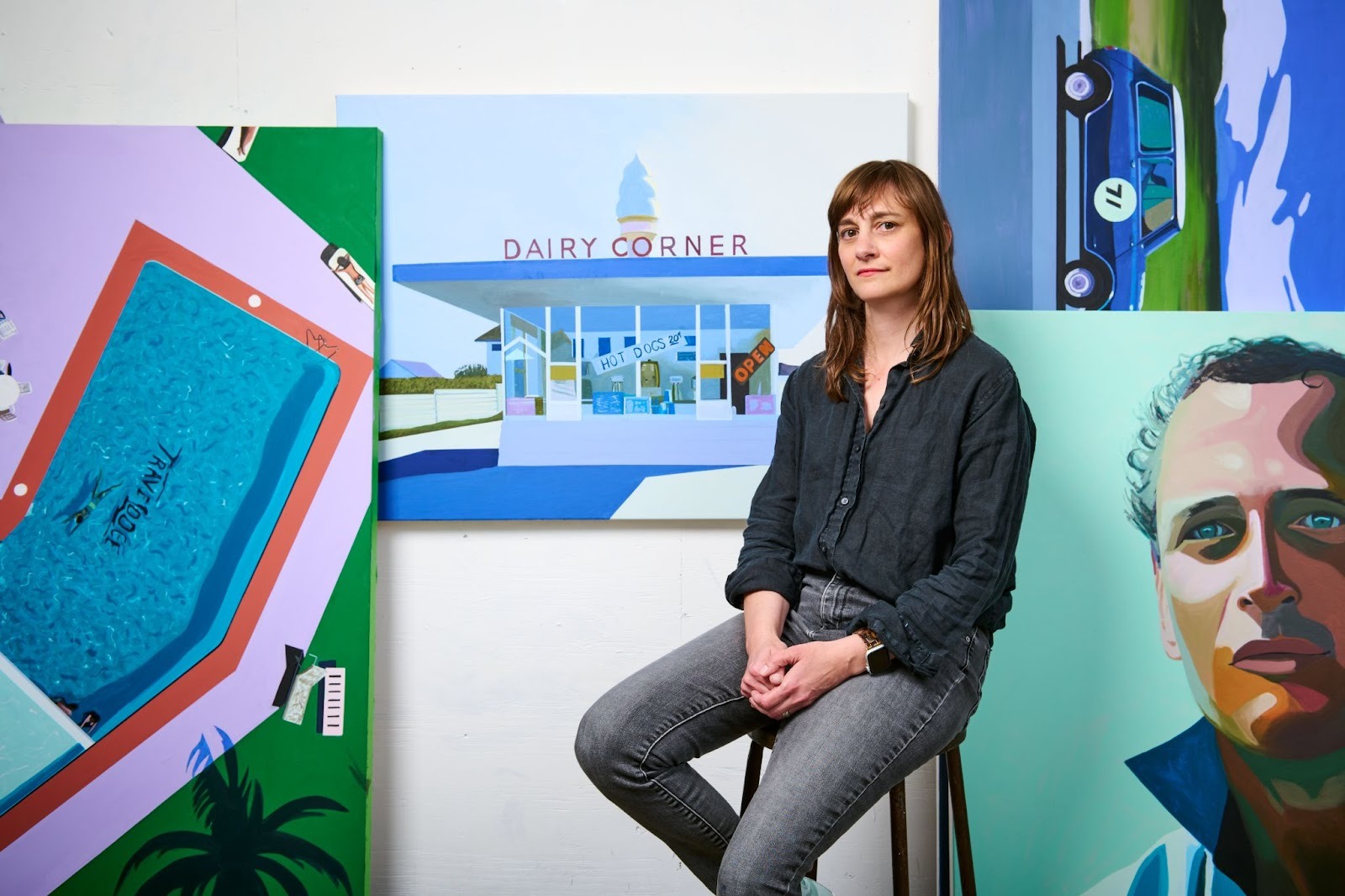
Jessica Brilli sitting in front of her works
Contemporary American artist Jessica Brilli, paints everyday American settings observed in quiet, transitional moments. Drawing on mid-century photographic sources, her work carries a nostalgic sense of Americana, filtered through faded colour palettes that echo the soft erosion of film over time. Figures, when they appear, remain secondary to the architecture and setting, absorbed into the scene rather than placed at its centre. The result is a restrained, atmospheric form of figuration, with mood shaped through light, shadow and a deliberate emphasis on space and stillness.
Charlotte Rose
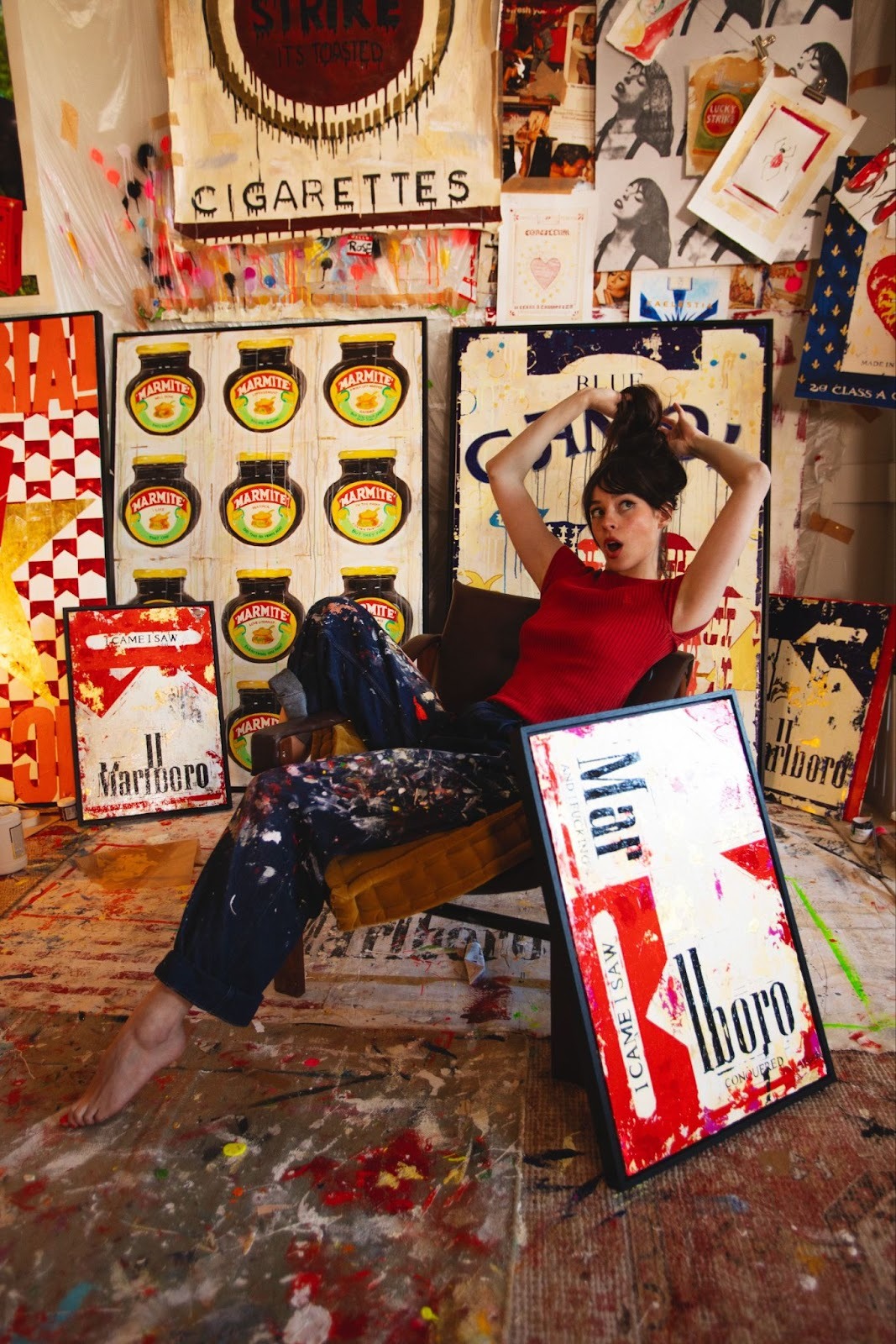
Charlotte Rose surrounded by her works. Photo Credit: Haris Nukem
Logos, packaging and slogans form the raw material of Charlotte Rose’s paintings, which draw directly on the visual language of advertising. Familiar imagery is cropped, distorted and overlaid with text, pushing commercial symbols into something more unstable and psychologically charged. Her paintings are dense and high-colour, with little empty space, creating a sense of visual pressure. Across the work, everyday commercial imagery becomes a way of examining how desire and memory are constructed – and how easily familiarity can tip into discomfort.
Celine Ali

Celine Ali surrounded by her works
Based in London, Celine Ali is a Romanian-Turkish artist whose paintings focus on faceless figures positioned within vivid, abstracted interiors. By removing any facial details, she shifts the attention to gesture and setting, allowing the body to register vulnerability, tension and self-possession without narrative cues. Her use of colour is deliberate and atmospheric, turning domestic spaces into psychological environments, shifting the viewer’s attention to how figures sit, stand or lean, and to the patterned spaces that hold them in place.
INAE
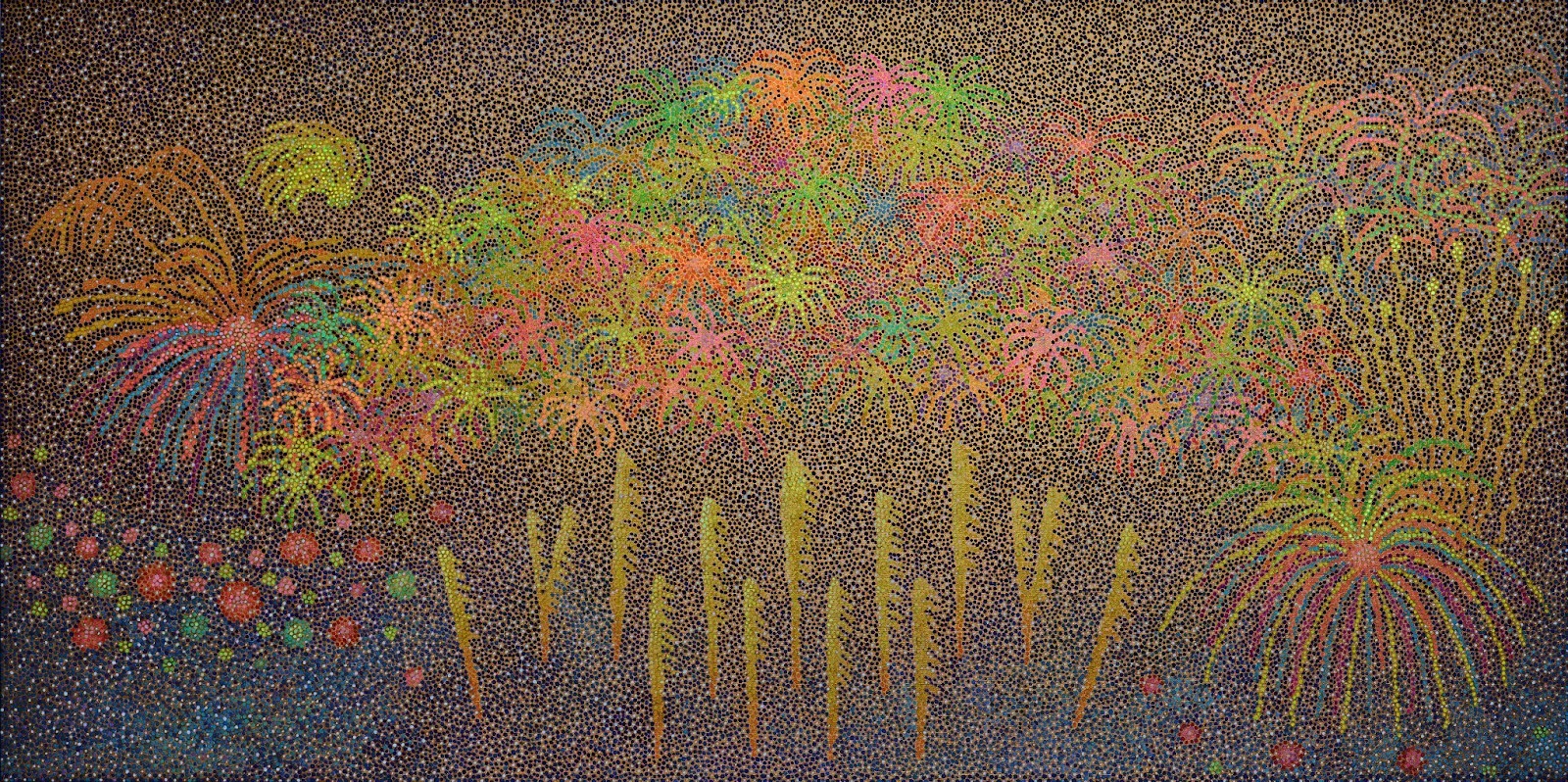
INAE, The Moment of Eternity (2025)
The South Korean artist INAE works with imagery rooted in memory and natural sensation rather than direct depiction. Her paintings are built through layers of colour and gesture, allowing the image to remain open and unresolved. Earlier marks are visible beneath translucent layers of paint, with gold appearing as a physical element within her surfaces, catching light and shifting as the viewer moves. Meaning emerges gradually through rhythm, colour and density, encouraging a slower, more attentive way of looking.
Kate Brinkworth
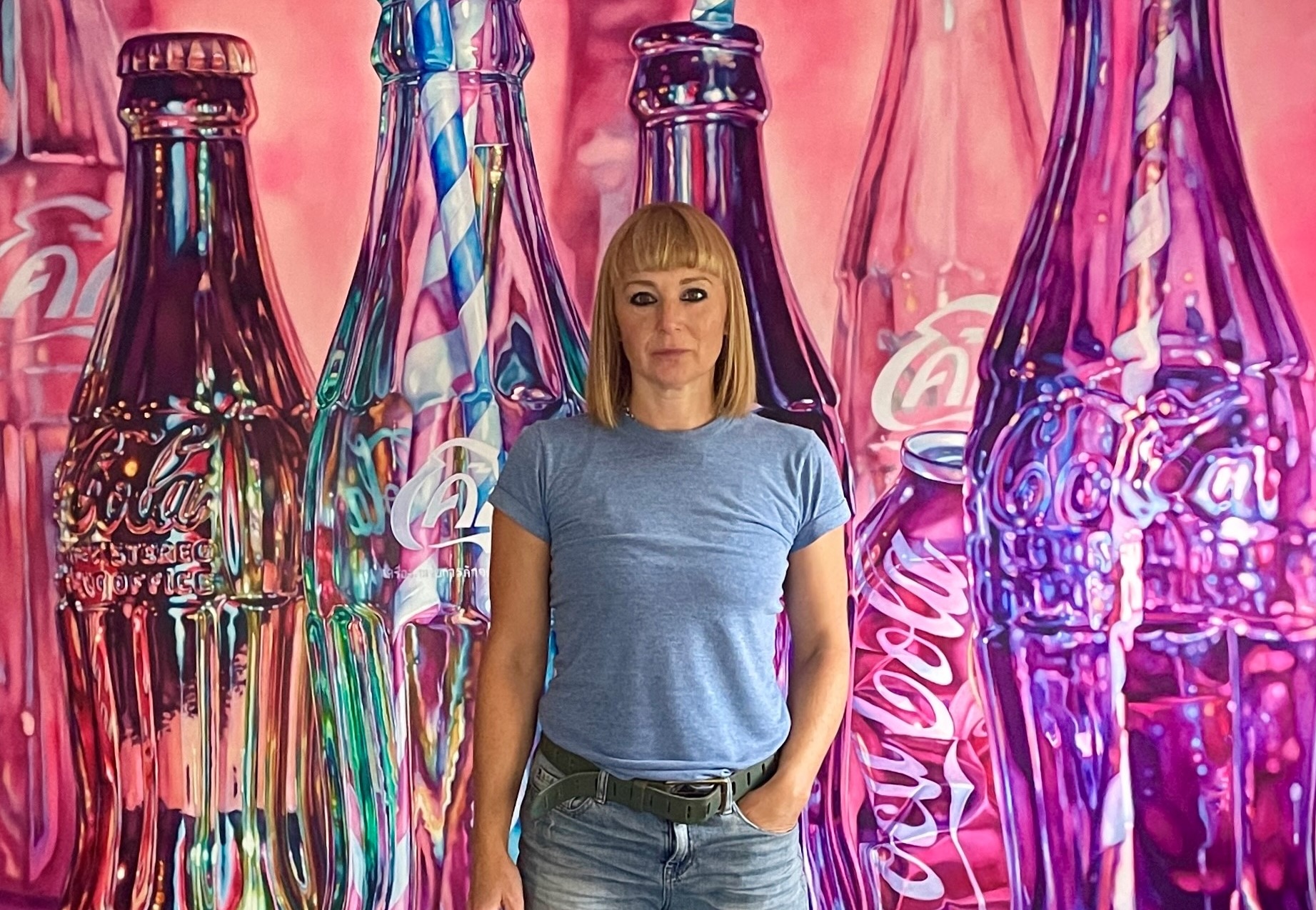
Kate Brinkworth in her studio
Glossy dice, playing cards and casino tables dominate the paintings of British artist Kate Brinkworth, rendered at an enlarged scale with near-photographic clarity. Drawing on the visual language of commercial photography, she paints objects associated with risk, temptation and spectacle, heightening their colour and surface finish. Familiar imagery is slowed down through meticulous technique, shifting attention from what the objects represent to how they are seen, and turning mass-produced symbols into carefully controlled still lifes.
Bibi Lei
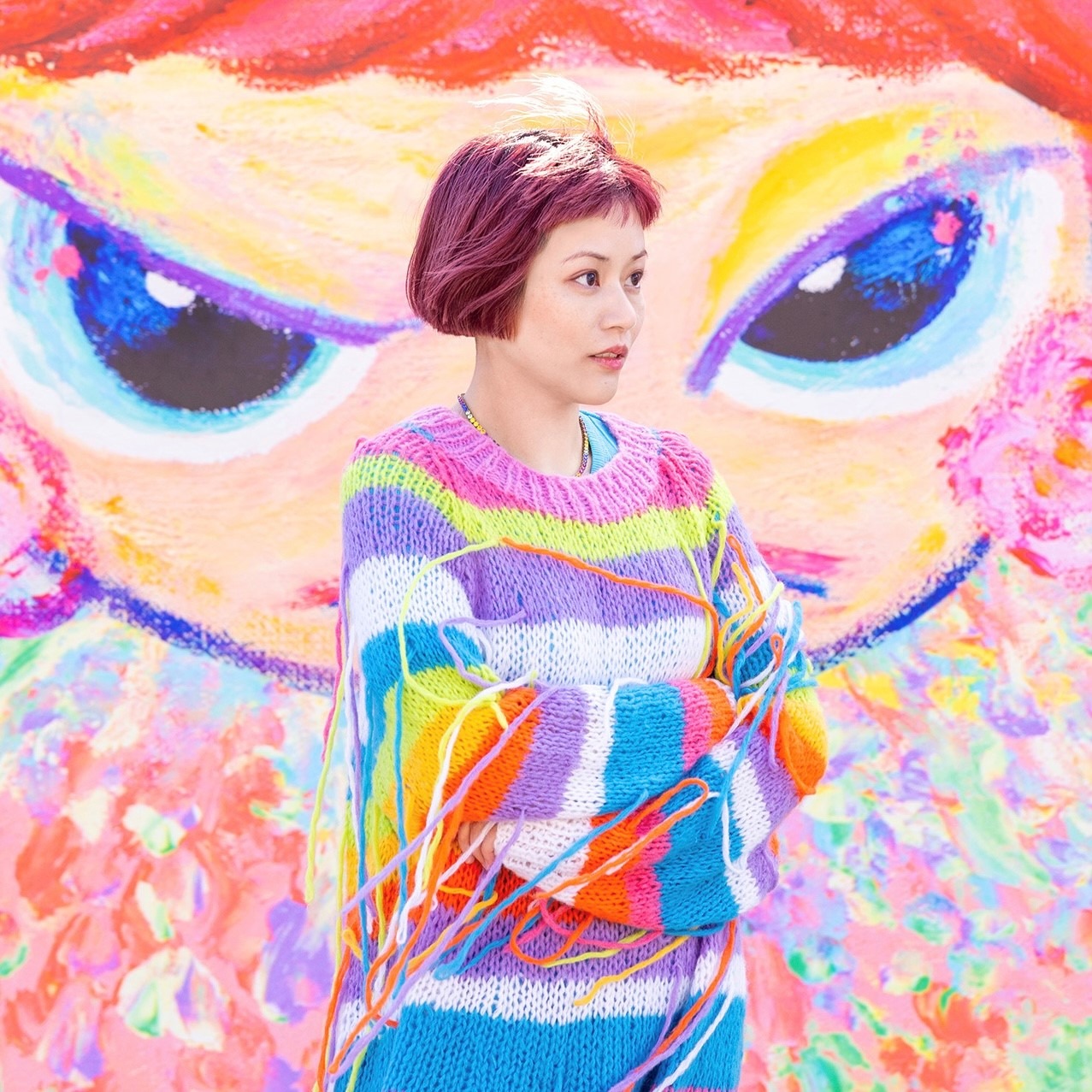
Photograph of the artist, Bibi Lei
Bright colours and animated figures run through Bibi Lei’s paintings, which feature a recurring cast of childlike girls moving through imagined worlds. Born in Macau and now based in Tokyo, Lei works intuitively, often using her fingers as much as brushes, allowing colour and gesture to lead the composition. Her figures are playful yet purposeful, appearing mid-movement, as though testing the space around them. Rather than narrative scenes, her paintings function as emotional environments, radiating warmth, optimism and a belief in possibility.
Mina Alikhani
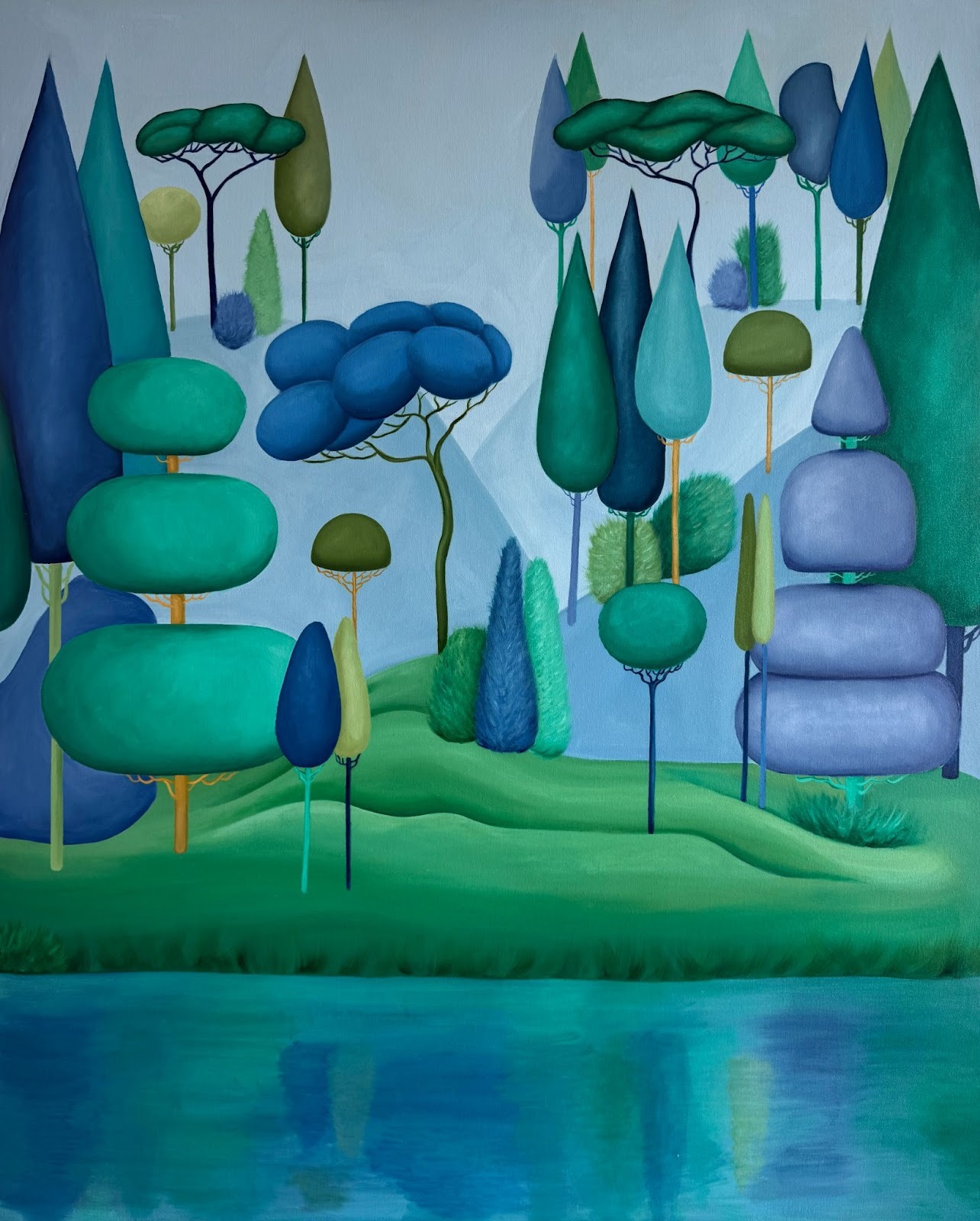
Mina Alikhani, Pentatonic Forest (2025)
Mina Alikhani, an Iranian-American artist based in Los Angeles, creates stylised, surreal landscapes drawn from imagined places. Composed of simplified, rounded forms – trees, rocks, clouds and water – her scenes visualise inner worlds, dreams and thoughts by pulling them into physical form. These constructed environments reflect a preoccupation with memory and displacement, offering spaces where what is lost can be found again, and positioning the landscape as a site of return.
The Famous Women Artists Who Helped Pave the Way
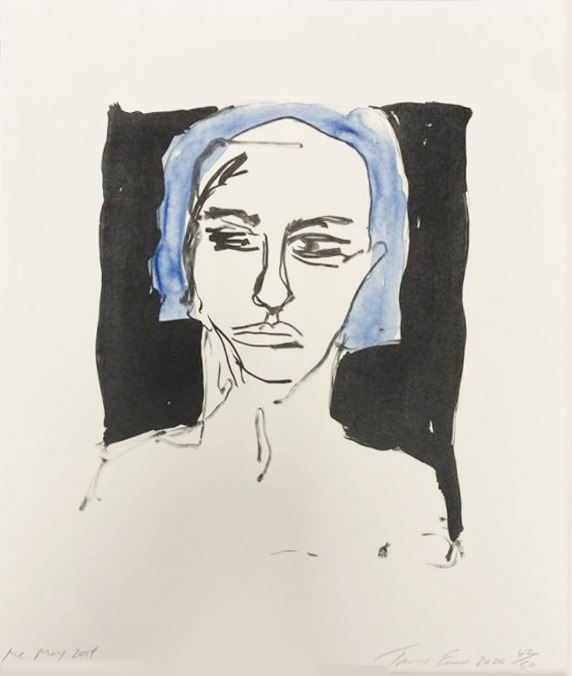
Tracey Emin, Me - May 2019 (2020)
On the second floor of the exhibition, works by Bridget Riley, Yayoi Kusama, Tracey Emin and Julie Curtiss are shown in conversation. Seen in close proximity to each other, the works highlight important women artists whose long-term commitment to their practice have helped secure a place for women artists in history, and created space for the range of women’s practices visible today.
Bridget Riley and Yayoi Kusama represent two distinct models of persistence. Riley built her intellectually engaging body of work around how the eye moves across a painted surface. By working repeatedly with optical rhythm, colour, pattern and repetition in art, she showed that painting could command attention without relying on narrative or imagery.
Repetition and the pursuit of self-obliteration sit at the core of Kusama’s process. By returning to the same motifs, including dots, nets and pumpkins, across painting, sculpture and installation, she expanded her work beyond the canvas, establishing a practice that operates across surface, space and perception. Now among the most famous women artists still working today, both Kusama and Riley remain key points of reference for younger generations.
The lineage of great women artists shifts with the inclusion of a self-portrait by Tracey Emin, whose career has been lived out very publicly since her emergence as part of the YBAs in the 1990s. Emin brought autobiography, vulnerability and directness into painting, insisting that lived experience could sit at the centre of the work. Her long, highly visible career, marked by institutional recognition as well as cultural notoriety, helped make emotional honesty a legitimate subject within Contemporary art.
That trajectory carries through to Julie Curtiss, whose work reflects what becomes possible once the groundwork is in place. Using surrealism and domestic imagery, she centres the body and everyday objects in paintings that are deliberately disquieting. With her work held in major museum collections and shown internationally, Curtiss occupies a firmly established position between generations, demonstrating how freedoms secured by earlier artists continue to circulate, mutate and find new expression.
Women, Art and Society: How Far We’ve Come – And How Far There Is to Go for Women in Art

Helen Beard, Shut Up And Kiss Me (2023)
The relationship between women, art and society has shifted significantly within Contemporary art. Visibility has increased, yet parity remains uneven, with structural gaps in representation, pricing and institutional commitment persisting beneath the surface.
At the same time, a broader shift is taking place in how women artists are supported and positioned. Greater continuity across exhibitions and programmes has allowed practices to develop in public view, creating space for artists to build presence through sustained visibility rather than isolated appearances.
Within this context, exhibitions like ‘HER’ play an important role. Bringing Contemporary women artists together within a single exhibition places different voices in relation to one another, creating familiarity and legibility through proximity. For collectors, this shared context encourages deeper engagement and a clearer understanding of individual practices.
Why Contemporary Women Artists Are Rising Now
Contemporary women artists are coming to the fore because their work is finally being encountered often enough to be recognised and remembered. Given time and attention, individuality becomes more important than alignment with any single trend. And that, ultimately, is what allows Contemporary art to move forwards.
Explore artworks by the great women artists of today. Contact a Maddox Gallery Art Investment Advisor to discuss available works and current opportunities.
READ MORE


Previous
Next
Basket
Please note items are not reserved until you have completed checkout.
No items found
Close
Your saved list
This list allows you to enquire about a group of works.
No items found
Enter your email to subscribe to our weekly newsletter.
Speak to a Maddox Art Advisor
Please enter your details below and someone from Maddox Gallery will call or email you back.
Mikael B
Register your interest in
Mikael B
Ross Muir
Register your interest in
Ross Muir
Andy Gotts
Register your interest in
Andy Gotts
Seb Chaumeton
Register your interest in
Seb Chaumeton
Miaz Brothers
Register your interest in
Miaz Brothers
The Connor Brothers
Register your interest in
The Connor Brothers
Jerkface
Register your interest in Jerkface.
Register your interest in
London
Gstaad
Los Angeles


