
May 7, 2026
The most exciting modern abstract artists working today aren't waiting for the art world's approval – they're earning it. From visceral, large-scale abstract paintings to intimately charged compositions, this is abstract art at its most alive. Combining bold technique, emotional depth and a fearless approach to the canvas, here are eight Contemporary abstract artists every serious collector should have on their radar.
A way of seeing that prizes colour, rhythm, texture and instinct as much as recognisable subject matter, abstract art has always been bigger than a style. More than a century after its first great rupture with tradition, abstraction is still one of the most elastic and compelling forces in Contemporary art, continually changing shape, absorbing new influences and finding a different voice with each generation.
As of 2026, collector demand is buoyant across galleries and the secondary market. From blue-chip pioneers to rising names, these are the Contemporary abstract artists every collector should know.
What Is Abstract Art? A Brief Definition for Collectors

What is abstract art? Abstract art distances itself from direct representation, using colour, line, shape, texture and movement to create meaning beyond literal depiction. It may be geometric and precise or loose, gestural and emotionally charged.
When abstraction emerged in the early 20th century, modern abstract artists such as Wassily Kandinsky, Piet Mondrian and Kazimir Malevich showed that painting did not need to imitate reality to carry depth and power. Their ideas informed later movements, from Abstract Expressionism to Minimalism.
Today, Contemporary abstract art is broader than ever, appearing in street culture, design, distorted figuration, landscape and digital media. In many of the most interesting practices, abstraction is a living language, borrowed, bent and reimagined to suit the present moment.
Abstract Art Movements That Shaped Today’s Market
Several major traditions still echo through the current market. Emerging in 1940s New York, Abstract Expressionism brought scale, gesture and emotional force to post-war painting. In the 1960s, Minimalism followed with a cooler language of line, repetition and proportion, while Op Art introduced movement through pattern, contrast and optical illusion. Contemporary abstract art still carries traces of all three of these abstract art movements.
Today’s artists move easily between these legacies while introducing influences of their own. At one end of the market sit museum-grade figures whose works helped define the last century. At the other are younger artists expanding abstraction through new materials, hybrid imagery and influences beyond the traditional art world. Some favour discipline and restraint, while others embrace noise, gesture and texture. The common thread is not one look, but a shared belief that paint can do more than simply describe.
Contemporary Abstract Artists Every Collector Should Know
1. Gerhard Richter: The Iconic Architect of Contemporary Abstraction
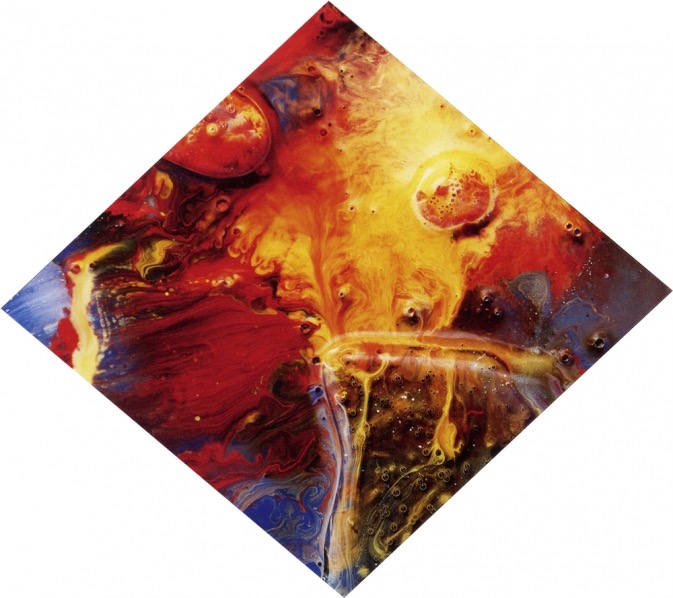
Gerhard Richter, Guildenstern (1998)
Few living artists have explored the possibilities of painting as rigorously as Gerhard Richter. Born in Dresden in 1932, Richter built his post-war career in Düsseldorf, working across blurred photo-paintings, colour charts, glass works and abstraction without ever settling into one signature style.
That refusal to stay in one lane is part of what has kept his practice so alive through the decades. Richter’s abstract works balance intention with accident, using dragged layers of paint and chance interventions to produce surfaces that shimmer, fracture and resist any single interpretation.
A standout example is Guildenstern (1998), created using Cibachrome photography. Suspended between image and abstraction, the work carries the emotional intensity of Abstract Expressionism while introducing a cooler sense of distance.
Richter’s market standing remains exceptional. His works are held in leading museum collections worldwide, with Fondation Louis Vuitton dedicating a major 2025–26 retrospective to more than six decades of his practice. Since stepping away from painting in 2017, while continuing to draw, Richter’s body of work has entered a new phase of historical appraisal, reinforcing the blue-chip strength and intellectual depth of his market.
2. Bridget Riley: The Master of Movement, Colour and Optical Perception
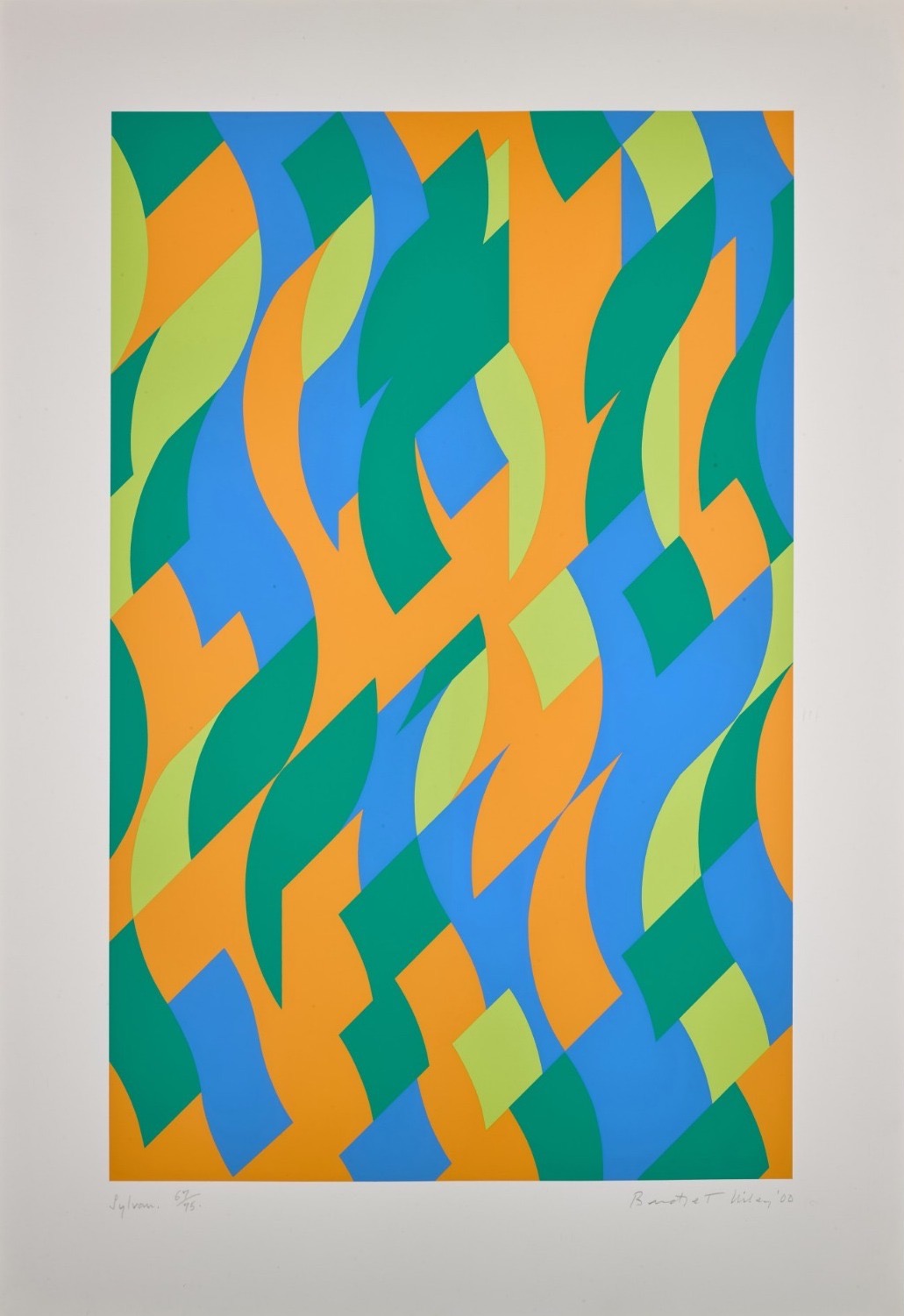
At 94, Bridget Riley is one of the great living figures of Contemporary abstraction. Emerging in the early 1960s, she became a central force in Op Art, but her career has long since moved beyond that label. Throughout six decades, Riley has explored the sensory experience of sight, turning colour, rhythm and visual sensation into one of the most distinctive bodies of work in famous British art.
Riley’s early black-and-white paintings made her name, but colour became the arena in which she kept surprising herself. Over the decades, stripes, curves and angled forms have allowed one tone to animate the next, so that the image appears to brighten, pulse or recede before the eye.
A superb example is Sylvan (2000), a screenprint built from four interlocking colours arranged in flowing, serpentine planes. The composition moves across the surface with something of the organic rhythm suggested by its title, as forms bend, weave and open against one another. It captures Riley at her most confident with colour, balancing control with a vivid sense of movement.
Institutional interest in Riley is firmly established, with concurrent museum exhibitions in the UK and Paris, alongside a spotlight display at Tate Britain running until June 2026. Centred on Riley’s gifted painting Concerto I (2024), the presentation places recent work alongside pieces made more than six decades earlier, revealing the remarkable continuity and range of her career – qualities collectors continue to value.
3. KAWS: Where Street Culture Meets Contemporary Abstract Art

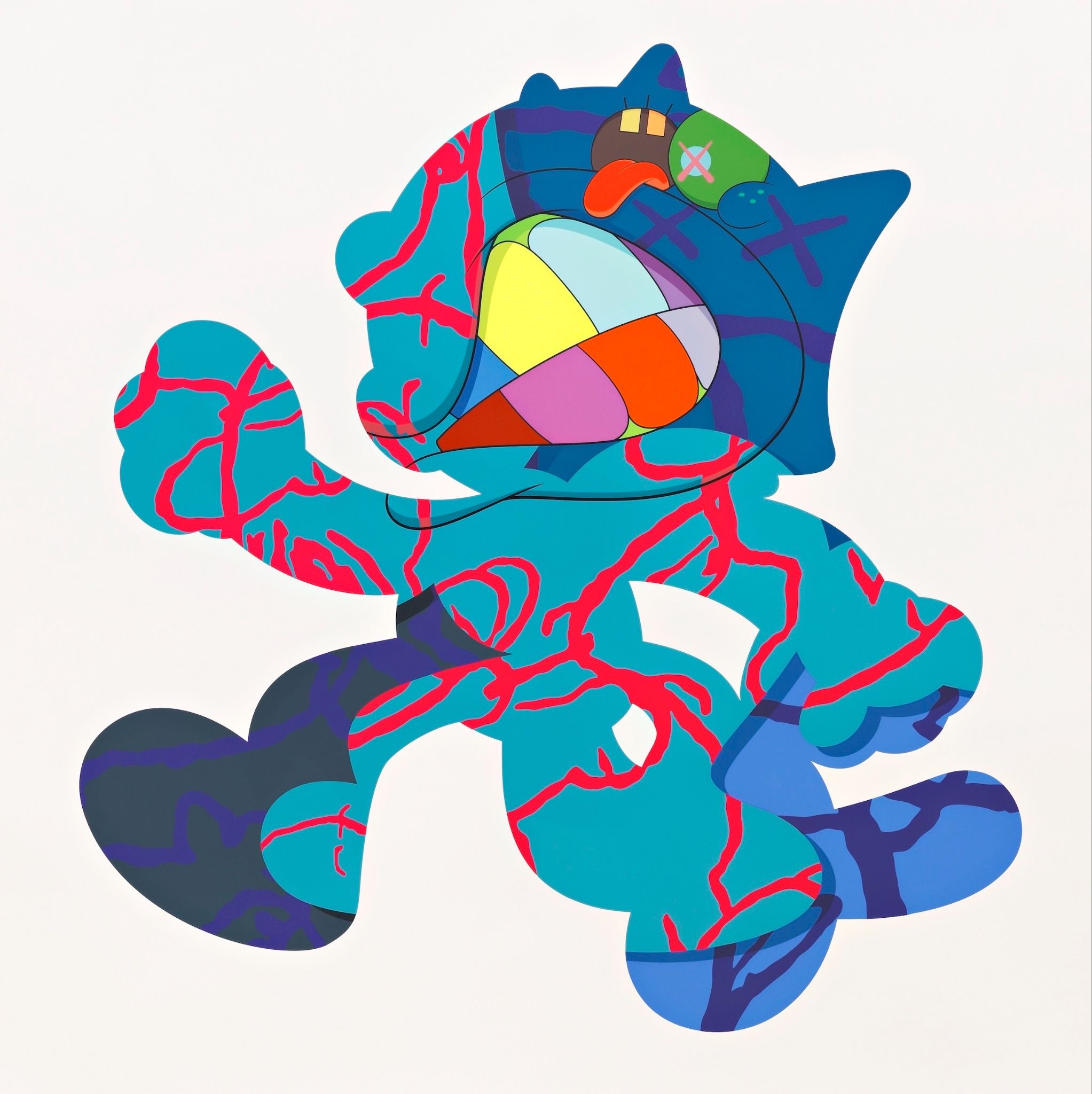
KAWS, Tension (2019)
One of the most recognisable visual artists of his generation, KAWS has built a language that comfortably straddles the street, the gallery and popular culture. Since emerging from the graffiti scene in 1990s New York, he has transformed cartoon forms, altered icons and recurring symbols into images known far beyond the art world, most famously Companion with its X-ed out eyes. Beneath that broad appeal lies a sophisticated understanding of composition, colour and graphic tension.
‘Tension’ (2019) marked a notable shift in KAWS’ practice. Moving away from his familiar figures, he turned instead to abstraction, using fractured forms, graphic lines and vivid colours. Across the series of Contemporary abstract prints, his signature crosses surface within the compositions like coded clues. The works reconnect with the energy of his graffiti artist beginnings while pushing his practice somewhere much less expected.
‘Tension’ was closely watched by collectors. The series broadened KAWS’ appeal beyond pop-led audiences, attracting buyers interested in abstract art and editioned works. Institutional interest is equally robust, with the travelling exhibition ‘KAWS: FAMILY’ at San Francisco MoMA, which ran until May 2026, drawing significant audiences, and a major outdoor takeover announced for New York Botanical Garden in 2027.
4. Lefty Out There: The Polymorph Pioneer of Contemporary Abstraction

Lefty Out There, Flo Necto (2024)
Lefty Out There has developed one of the most recognisable visual languages to emerge from contemporary street culture. First known for his murals and public works, the Chicago-born artist uses his trademark looping forms, known as polymorphs, to generate atmosphere, movement and pattern in art, proving how far a single motif can be pushed without ever losing its energy.
That language has evolved through material as much as image. Lefty frequently experiments beyond paint, using machinery, carpentry and unconventional surfaces to bring his polymorphs to life in different ways. Flo Necto (2024), a yarn-based work, captures that spirit of exploration. Its circular field of colour is covered in his signature polymorphs, showing how a softer, tactile medium can alter the way the motif is experienced. It also reflects the wider appetite among collectors for works that move beyond the traditional canvas into materially inventive territory.
Recent projects reinforce the range of his practice, from the solo exhibition ‘Tempus’ at Maddox Gallery to a 2025 partnership with Esmé, the Michelin-starred Chicago restaurant, where his visual language was translated into a 10-course tasting menu. It is this mix of recognisability and experimentation that keeps collectors engaged.
5. David Pher: Painting to the Pulse of Colour and Sound
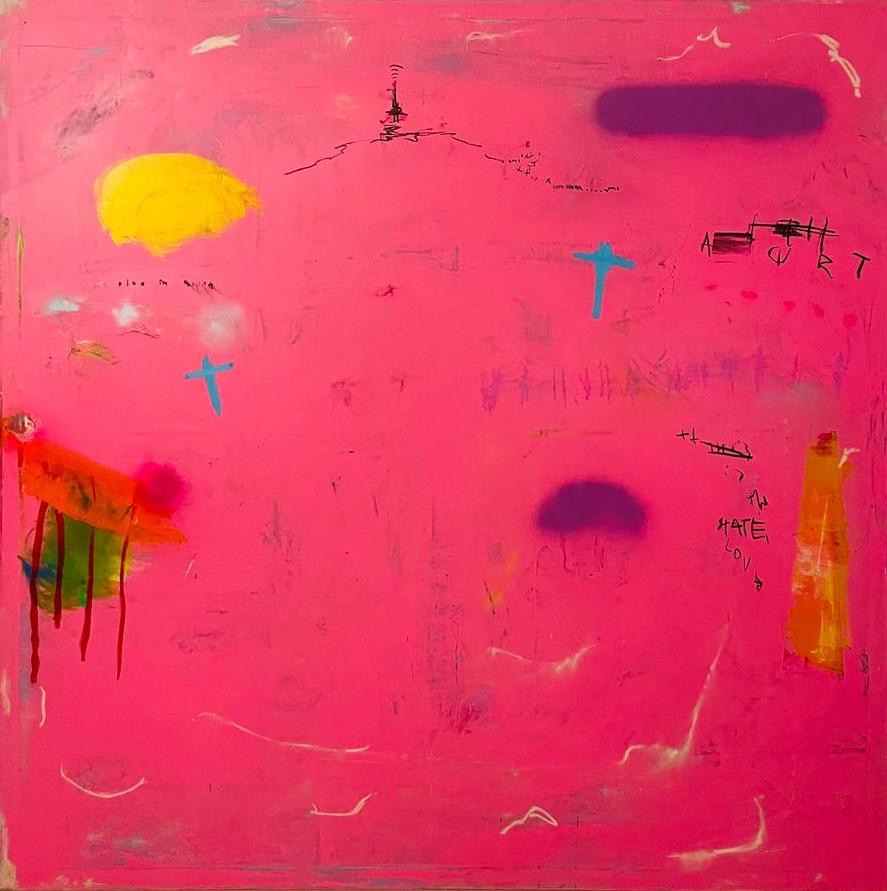
Berlin-based David Pher came to painting by an unusual route. Raised in central Germany in a home filled with art, he spent years working in music production and as a DJ before returning to the studio. That crossover between sound and image can be felt in his practice, with pace, pauses and sudden bursts of energy pulsing through his canvases.
Pher’s large-scale paintings are created using abstract art techniques like layering, overpainting and partial erasure, allowing earlier decisions to stay visible beneath the surface. Pakard (2022) captures this well with its vivid field of electric pink animated by floating symbols, scrawled mark-making and passages where the colour suddenly thickens or recedes. The finished canvas sits somewhere between colour-field painting, graffiti residue and a half-remembered dream.
His work has been exhibited internationally and featured in group presentations such as ‘Reimagining Colour’ at Maddox Street Gallery in 2023, while collaborations with brands including ZARA and Sennheiser show how naturally his visual language extends beyond the gallery wall. Citing major voices in post-war and Contemporary abstraction such as Cy Twombly and Gerhard Richter among his inspirations, Pher turns those references into paintings infused with colour, movement and a restless sense of possibility.
6. bErto: Colour, Coastlines and a Sunlit Sensibility

bErto brings a free-spirited, sunlit sensibility to Contemporary abstraction. Raised in Miami and now based in California, the self-taught artist has spent years moving between cities including Athens, London, Paris and Milan, with surfing a constant thread throughout. That mix of travel, coastline and cultural references gives his work its easy openness.
Using line, collage and bold colour to suggest places half remembered rather than fully described, his paintings hover between abstraction and memory. The Beach House (2021) captures that mood perfectly, with a bright green field scattered with spare marks, a striped parasol and the outline of a reclining figure. Part landscape, part daydream, it shows how little bErto needs to conjure an atmosphere.
Recent group exhibitions include ‘Connecting Outcomes’ at Maddox Gallery in 2025, alongside shows in Atlanta, Los Angeles and Auckland. Together they reflect the growing international reach of an artist whose Contemporary abstract paintings offer warmth, immediacy and interior appeal.
7. Julio Sarramián: Rewiring the Landscape Through Colour and Code
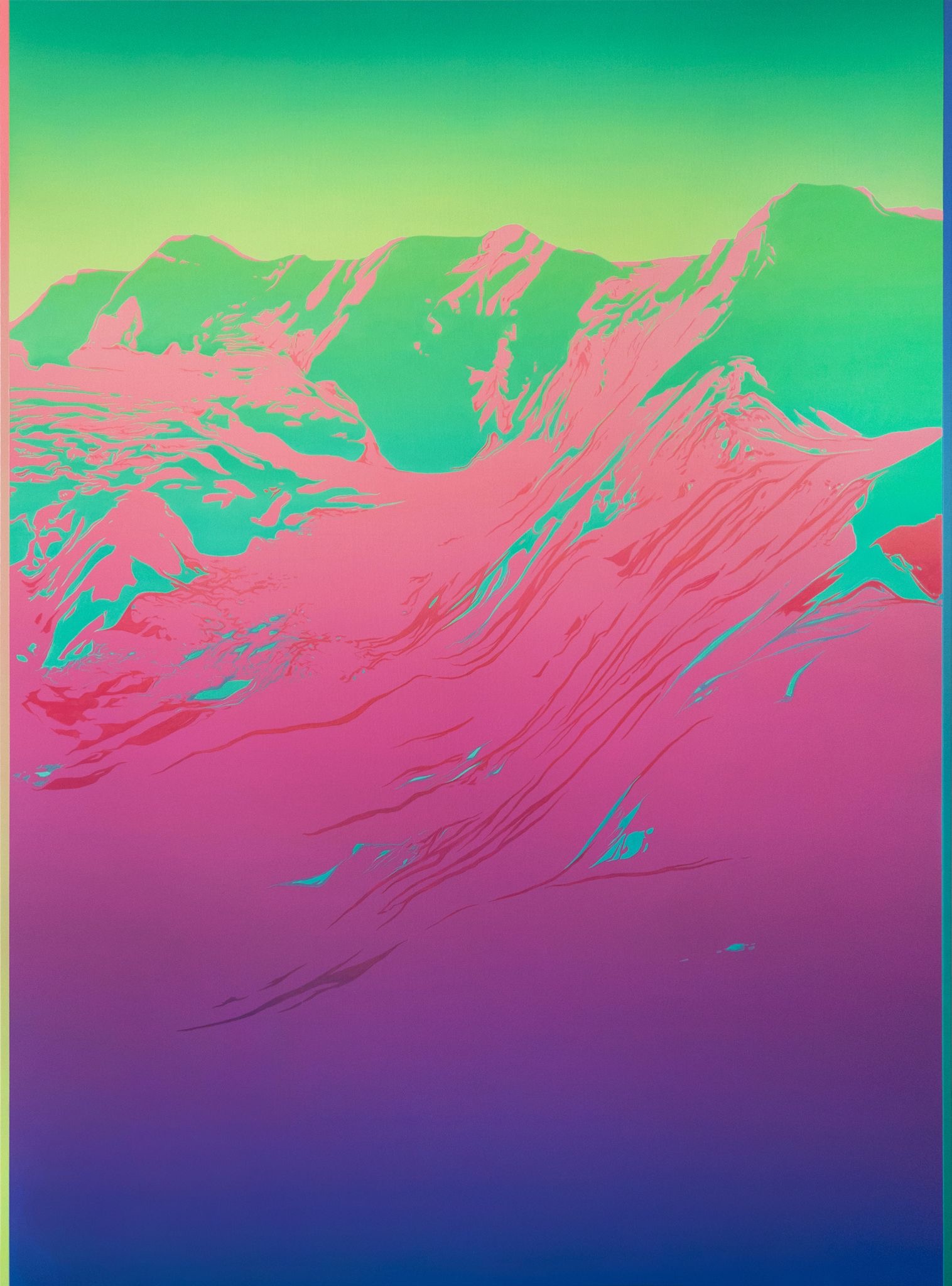
Julio Sarramián, Glitchland 27 (2022)
Madrid-based Julio Sarramián approaches landscape as something to be questioned rather than simply admired. Trained in philosophy and fine art, he brings unusual intellectual depth to his Contemporary abstract art, examining how nature is perceived and altered in a technologically mediated world.
Using oil on linen, Sarramián builds gradients of saturated colour that first appear serene, then subtly unstable. Glitchland 27, from the ‘Glitchland’ series (2022), is a striking example, where a mountainous terrain emerges through acid greens, pinks and violets, as though the image has been corrupted mid-transmission.Across the series, digital interference, visual fractures and chromatic distortions recast the traditional landscape as something more volatile.
Sarramián has exhibited across Spain and internationally, from Brussels to Buenos Aires, Brazil to China, while receiving awards from institutions including the Spanish Ministry of Culture and BMW Group. For collectors, his work brings something less common to Contemporary abstract painting, combining visual beauty, conceptual rigour and a distinctly current subject matter.
8. Dairo Vargas: Where Memory, Figuration and Abstraction Blur
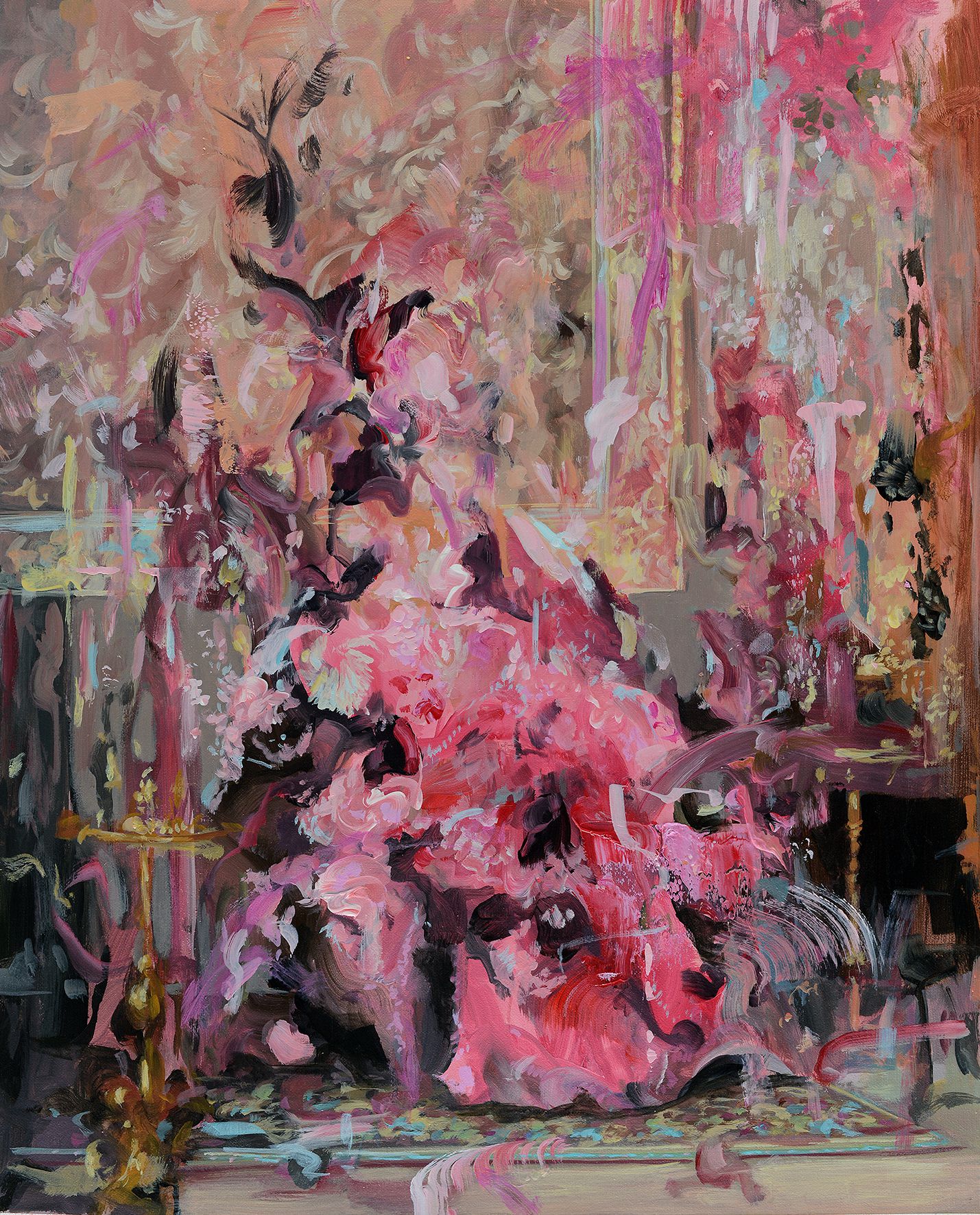
Dairo Vargas, Inner Grace (2025)
London-based, Colombian-born Dairo Vargas paints at the threshold between figuration and abstraction. Early memories of church interiors, saints and stained glass inform his visual world, while years in London have brought a contemporary urgency to his canvases. Human figures appear in his paintings, but never as fixed portraits. Instead, they surface through memory, feeling and states of change.
Built through successive layers of paint, Vargas’ works reveal forms only gradually, as if drawn from the subconscious. Inner Grace (2025) pushes deeply into abstraction, with pinks, mauves and smoky neutrals gathering in a scene that feels like an apparition. Faces, bodies and fragments of architecture are implied rather than defined, creating a surface alive with tension.
Recent exhibitions include Dairo Vargas’s second Maddox solo show, ‘Coexistent Narratives’, at Maddox Gallery Shepherd Market in 2025. As interest grows in artists who pull abstraction into more psychological and figurative art territory, Vargas brings a rare sense of atmosphere and emotional complexity to the category.
|
Collector Insight: What Makes a Contemporary Abstract Artist Collectable?
The most collectable abstract artists combine visual originality with signs of lasting market confidence.
|
Uniting Themes Across the New Wave of Contemporary Abstract Artists
What links these artists is not a single look or school of thought, but a shared understanding that abstraction remains open territory. For some, it is rooted in colour and optical sensation; for others, in memory, landscape, psychology or street culture. The language changes, but the impulse to move beyond straightforward depiction endures.
Material experimentation is another common thread. Paint now sits alongside yarn, collage, digital references, sculptural surfaces and found media, reflecting a market increasingly receptive to works that move beyond the traditional canvas.
Perhaps most importantly, the new generation of emerging abstract artists treats abstraction as something porous rather than pure. It can absorb figuration, design, architecture, emotion or technology without losing its force. That flexibility helps explain why Contemporary abstract art is still commanding so much attention in 2026.
Why Collectors Are Drawn to Contemporary Abstract Art
Collectors are drawn to abstraction for its versatility, emotional openness and global appeal. It works across interiors, travels easily across cultures and rewards repeated viewing. From a market perspective, established abstract artists can offer healthy liquidity, particularly where demand is international and supply is limited. For many collectors, that combination of visual flexibility and relative market resilience is especially attractive.
|
Collector Insight: Why Abstract Art Remains One of the Most Collected Genres Abstract art enjoys broad collector interest because it combines visual flexibility with long-term market relevance.
|
Abstract Paintings vs Prints: What to Consider

For collectors entering the abstract art market, one of the first decisions is whether to buy an original painting or an editioned print. Both can be rewarding, but they offer different advantages depending on budget, goals and how you plan to live with the work.
Original abstract paintings are one-off objects that carry the physical presence of the artist’s hand, which is central to their appeal for many buyers. Original paintings can also offer greater upside, particularly when acquired early or from sought-after periods.
Prints offer a more accessible route into collecting abstract art. Editions by major names such as Gerhard Richter, Bridget Riley or KAWS can provide entry at lower price points while still offering visual impact and recognised market demand. They are often ideal for newer collectors or for those seeking breadth across several artists rather than committing all capital to one work.
The decision is not simply investment versus decoration. Exceptional prints can perform well, while many collectors buy originals for the personal connection. Ultimately, the right choice depends on balancing taste with rarity, condition, provenance and budget.
How to Start Collecting Contemporary Abstract Art
Contemporary abstract art is one of the market’s most resilient categories because it continues to evolve. It offers collectors opportunities across price points and generations, from blue-chip names to new abstract artists in the earliest stages of their career.
For those starting a collection, it’s important to focus on quality over quantity. Learn the difference between paintings and prints, study an artist’s best-performing series, compare primary and secondary market pricing, and pay close attention to condition, provenance and long-term relevance.
The strongest decisions usually combine personal conviction with expert advice. At Maddox Gallery, our specialists advise collectors at every stage, with access to blue-chip art names, sought-after limited edition prints and exceptional new talent. For those looking to build a collection with lasting relevance, Contemporary abstract art is one of the most rewarding places to begin.
Explore Maddox Gallery’s curated collection of abstract art.
Speak with a Maddox Gallery art investment advisor for tailored guidance.
READ MORE


Previous
Next
Basket
Please note items are not reserved until you have completed checkout.
No items found
Close
Your saved list
This list allows you to enquire about a group of works.
No items found
Enter your email to subscribe to our weekly newsletter.
Speak to a Maddox Art Advisor
Please enter your details below and someone from Maddox Gallery will call or email you back.
Mikael B
Register your interest in
Mikael B
Ross Muir
Register your interest in
Ross Muir
Andy Gotts
Register your interest in
Andy Gotts
Seb Chaumeton
Register your interest in
Seb Chaumeton
Miaz Brothers
Register your interest in
Miaz Brothers
The Connor Brothers
Register your interest in
The Connor Brothers
Jerkface
Register your interest in Jerkface.
Register your interest in
London
Gstaad
Los Angeles


